What Matters
June 2026 Issue
Ctrl+Alt+Decorate
In 2026, AI can restyle your living room in seconds, generate photorealistic renderings from a sketch, and suggest furniture you didn’t know you wanted. It can also invent a sofa that doesn’t exist and produce a room so flawless it has all the warmth of a screen saver.
This issue of What Matters takes a clear-eyed look at AI in design — what it’s good at, where it falls short, and why the gap between a generated image and a finished home is wider than most people think. AI is a remarkable tool. But a tool is only as good as the hand that holds it.
THE NEW DRAFTING TABLE
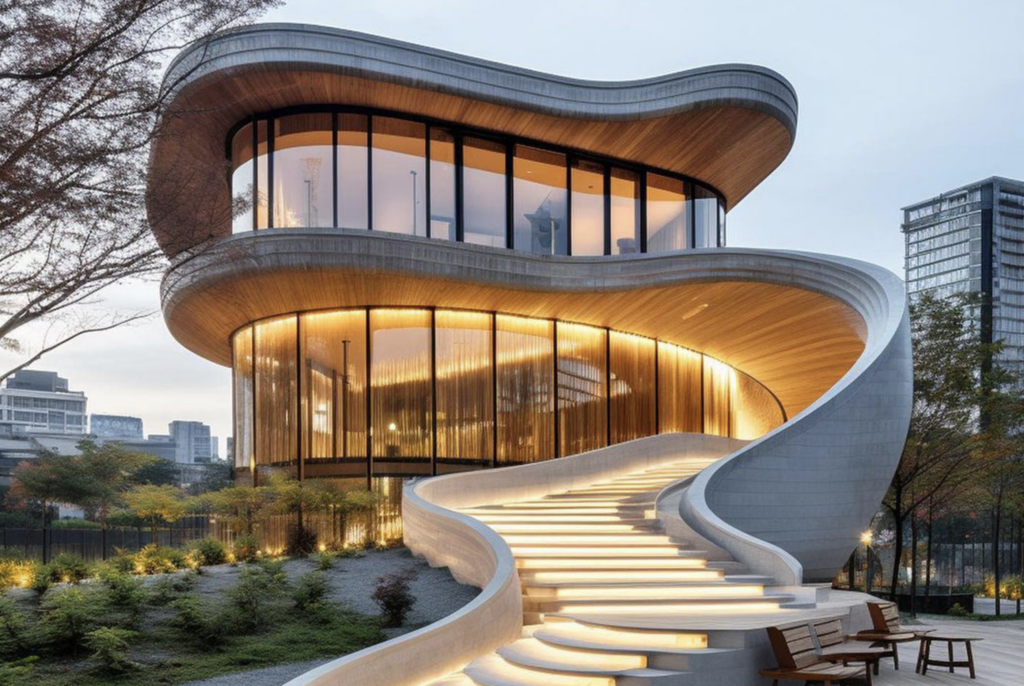
AI has arrived in the design studio—not as a replacement for the designer, but as something closer to a very fast, occasionally brilliant intern. A recent survey by Chaos and Architizer, covered in both Dezeen and ArchDaily, found that sixty-four per cent of architects and designers have now experimented with AI tools in their workflows, with eighty-six per cent reporting meaningful time savings. The most popular applications aren’t the glamorous ones—they’re rendering, image enhancement, and early-stage concept development. The tedious hours spent producing client-ready visuals from rough ideas are shrinking. The thinking behind those ideas is not.
What’s notable is the restraint. Firms aren’t handing the keys to the machine. They’re using it where speed and iteration matter most—in pre-design exploration, moodboarding, and rapid visualization—while keeping design judgment, client relationships, and material decisions firmly in human hands. As one Chaos researcher put it, the opportunity isn’t about doing less design work. It’s about doing better design work. Read more in ArchDaily
How to make it your own:
If you’re curious about AI visualization, try uploading a photo of your room to a free tool like RoomGPT or Planner 5D. It won’t replace professional design advice, but it’s a surprisingly useful way to test ideas before committing.
YOUR ROOM, REIMAGINED (SORT OF)
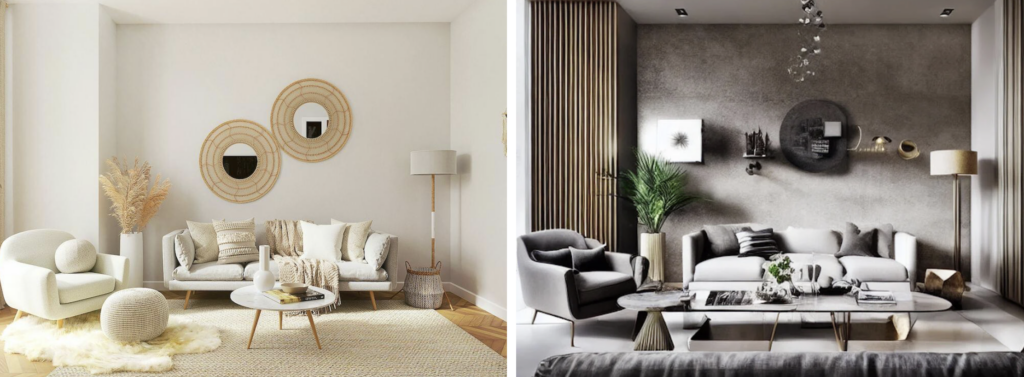
The consumer side of AI design is booming—and it’s both impressive and instructive. Apps like InteriorAI, HomeDesigns, and RoomGPT now let homeowners upload a photo of any room and see it instantly restyled in dozens of aesthetics, from Japandi to mid-century modern. The results can be startlingly realistic. They can also be startlingly wrong. Business of Homenoted early on that first-generation AI tools were prone to rearranging a room’s actual architecture—moving windows, altering ceiling heights, inventing doors—to achieve a desired look. The image looked beautiful. The room it depicted was physically impossible.
The technology has improved considerably since then, but the fundamental limitation remains: AI can generate a compelling image of a space, but it can’t tell you whether the sofa will fit through the doorway, whether the finish will hold up to a household with three kids and a dog, or whether that gorgeous pendant light requires rewiring your entire ceiling. For inspiration, these tools are genuinely powerful. For execution, you still need a human who’s been in the room. Read more in Business of Home
How to make it your own:
Use an AI restyling app as a conversation starter—snap your living room, generate a few variations, and bring the ones you respond to into a consultation with a designer. Think of it as a visual brief, not a blueprint. Then send it our way for a reality check! (Definitely see the next article, too.)
THE ROOM THAT DOESN’T EXIST
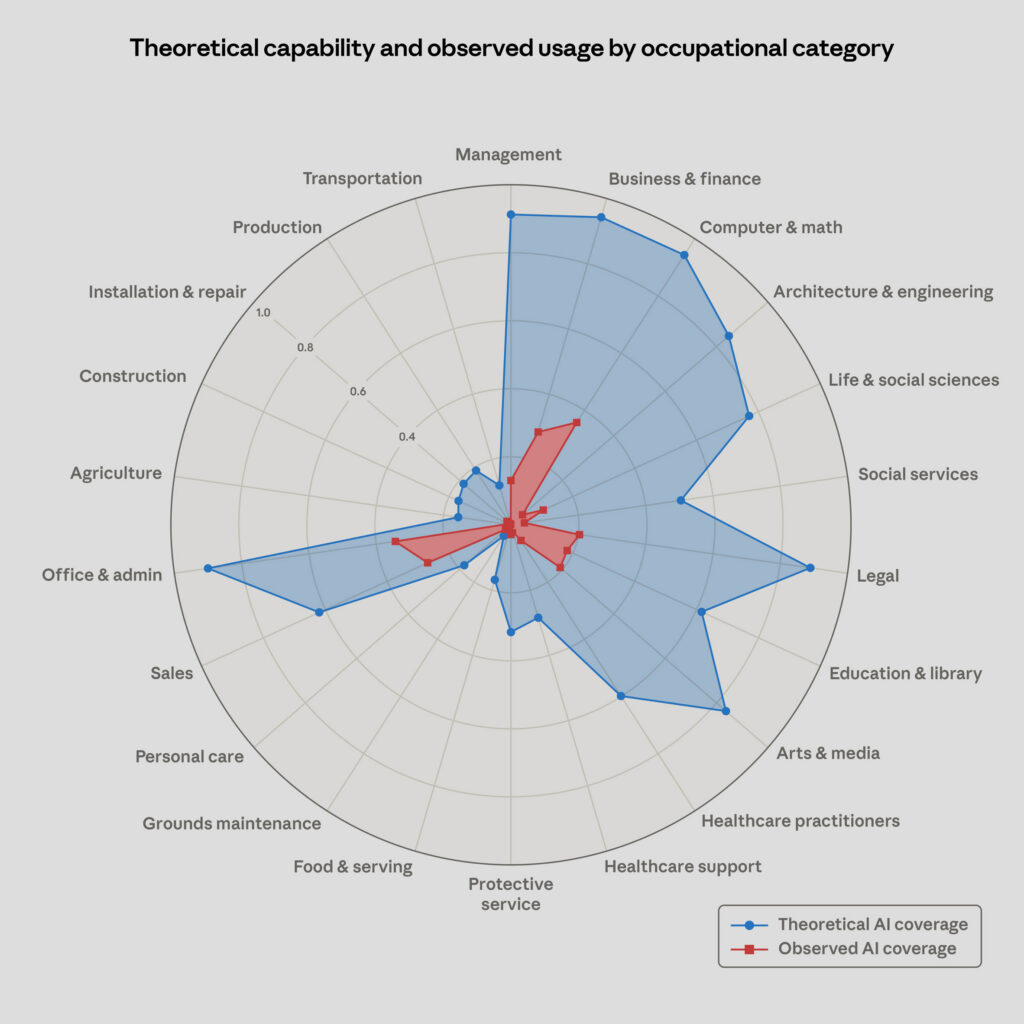
Here’s a scene playing out in design studios with increasing regularity: a client arrives with an AI-generated image of their dream room. It’s gorgeous. They want exactly that. The designer searches for the statement piece at the center of the image. It doesn’t exist. It was hallucinated—a plausible-looking object invented by the algorithm, with proportions that don’t work for the space and a finish that isn’t manufactured by anyone. Architizer, responding to a recent Anthropic study on AI automation in architecture, captured the tension perfectly: the technology can generate a stunning image in seconds, but it has no understanding of sequencing, trade coordination, material lead times, or the thousand small judgment calls that turn a rendering into a room someone can actually live in.
This isn’t a failure of AI so much as a clarification of what it is—and what it isn’t. It’s an image engine, not a design practice. And the gap between those two things is exactly where the value of a trained designer lives. Read more in Architizer
How to make it your own:
If an AI-generated image inspires you, bring it to a designer as a mood reference—not a spec sheet. A good designer can decode what you’re responding to (the light, the palette, the proportions) and translate it into something real and buildable.
IN PRAISE OF THE IMPERFECT

If AI design tends toward the frictionless and the optimized, Nick Foster wants to know: what are we losing in the process? Writing in Dezeen, the former head of design at Google X argues that decades of software design have produced a culture of seamlessness—grids, templates, rational systems, every bump smoothed away—and that AI risks accelerating the trend. His plea is not to reject the technology, but to use its inherent strangeness as a provocation. Large language models are stochastic systems with their own quirks. Rather than polishing those quirks away, designers could treat them as creative material—an invitation to bring texture, character, and unpredictability back into spaces that have become, in Foster’s words, neat, tidy, polite, and free from anything confrontational or different.
It’s a perspective worth sitting with, especially in interior design. The homes people remember—the ones that feel genuinely theirs—are rarely the ones that look like a perfectly optimized rendering. They’re the ones with a rug just on the other side of unusual, the inherited lamp, the shelf that only makes sense if you know the story behind it. AI can generate a room. It can’t yet generate a life. Read more in Dezeen
How to make it your own:
Next time you’re tempted to optimize a space into perfection, leave one deliberate imperfection in place—a vintage find, a bold color choice, a piece that breaks the pattern. Character lives in the details that an algorithm would smooth away.
PROJECT SPOTLIGHT: THOU ART LOVELY
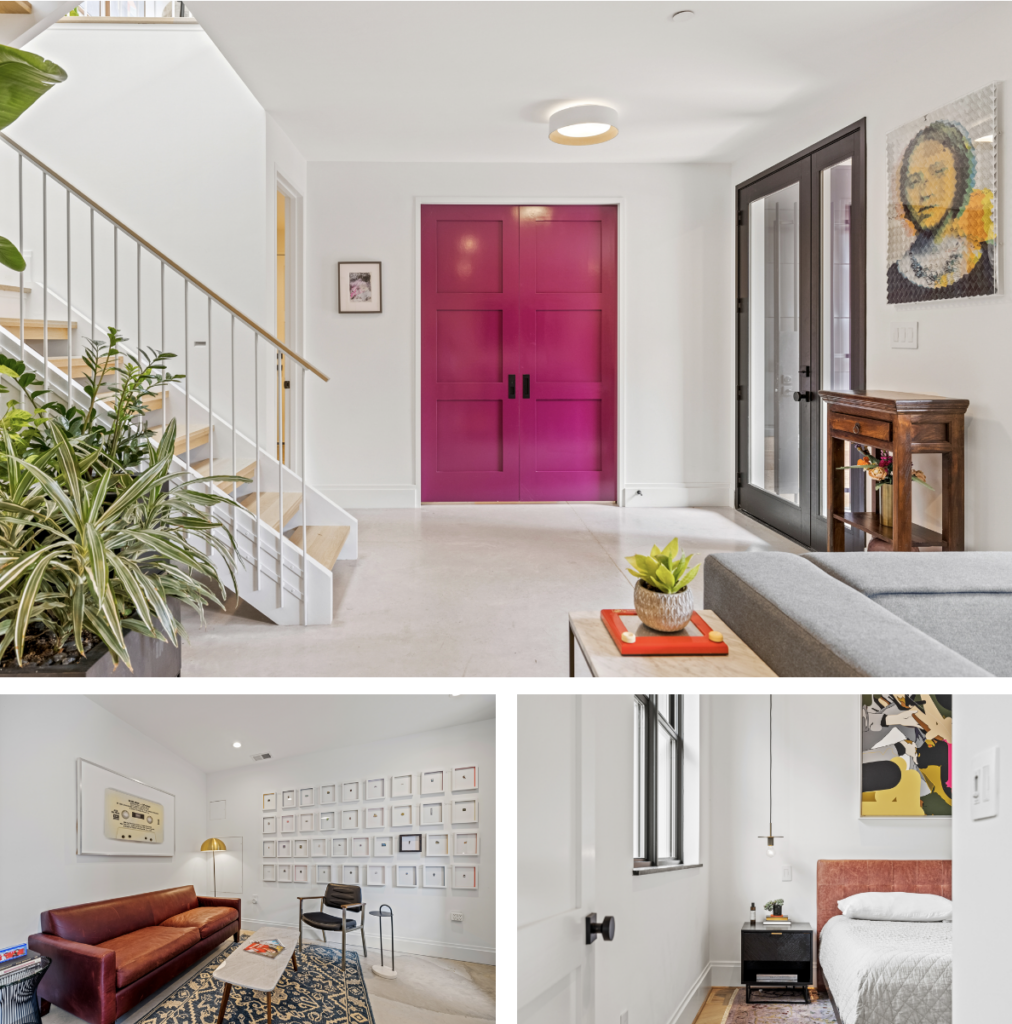
A minimal industrial duplex loft, a growing art collection, and a client who wanted the two to work as one—that was the brief. For this project, Interior Matter curated and hung the art, then built the interior around it: layered minimal furniture, antique rugs, and a few mid-century icons, all calibrated to let the collection lead. The showstopper? A pair of high-gloss bright pink pocket doors that close off the home office—a moment of pure, unapologetic personality in an otherwise restrained palette.
In an issue about AI and design, this project is a quiet reminder of what can’t be generated. No algorithm curates an art collection around a client’s life. No rendering engine knows that the industrial bones of a loft need the warmth of an antique rug to land, or that a room full of restraint earns the right to one outrageous gesture in hot pink. See the full project →