What Matters
May 2026 Issue
The Kitchen Has Left the Building
Last month, we opened the door between inside and out. This month, we’re not going back in. May’s issue of What Matters is about what happens when outdoor living becomes the destination.
We look at how architects and designers across the globe are rethinking what it means to live outside—from a pink concrete house in Chile built entirely around a swimming pool, to the quiet rise of intimate garden rooms designed for solitude rather than spectacle. We explore why restraint is the new luxury in fire features, and why Architectural Digest says the outdoor kitchen has officially graduated from grill station to genuine infrastructure. We’re also spotlighting the work of a firm we admire right here in the DMV: Colao & Peter, whose Alexandria Modern project is the kind of outdoor living that makes you wonder why anyone would go inside at all.
STILL WATER RUNS DEEP
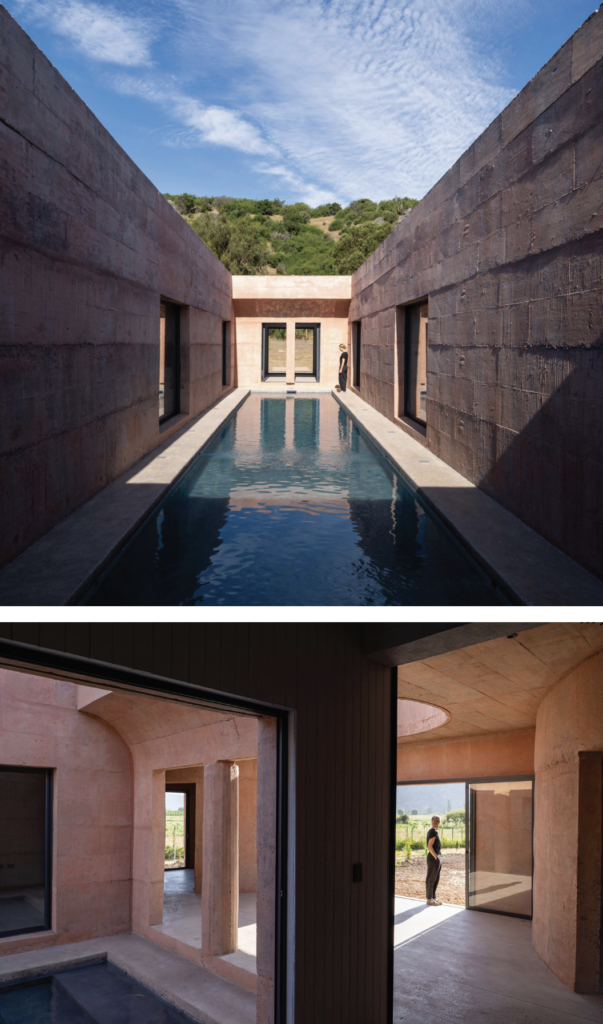
The swimming pool has shed its last traces of suburban recreation and emerged as something closer to architecture. Pezo von Ellrichshausen’s recently completed Lima House in Chile’s central valley makes the argument with striking economy: a single-story home in dusky pink pigmented concrete, organized entirely around a narrow linear pool that cuts through the center of the plan. Reflected light from the water animates every room. The courtyard it creates aligns with the path of the sun, turning the pool into a timepiece as much as a place to swim. It’s a home designed not beside a pool, but around one.
The lesson extends far beyond Chile. Increasingly, pools are being conceived not as features dropped into a landscape, but as organizing principles—anchoring sight lines, shaping circulation, and establishing the emotional center of a property. Darker finishes, sculptural geometries, and integrated seating are replacing the standard turquoise rectangle, giving water a presence that feels deliberate rather than decorative. Read more in Dezeen
How to make it your own:
Think of your pool—or even a modest water feature—as a focal point that other spaces orient toward. A simple change in finish, from pale plaster to dark stone or charcoal aggregate, can transform how water reads in a landscape.
A PARTY FOR TWO
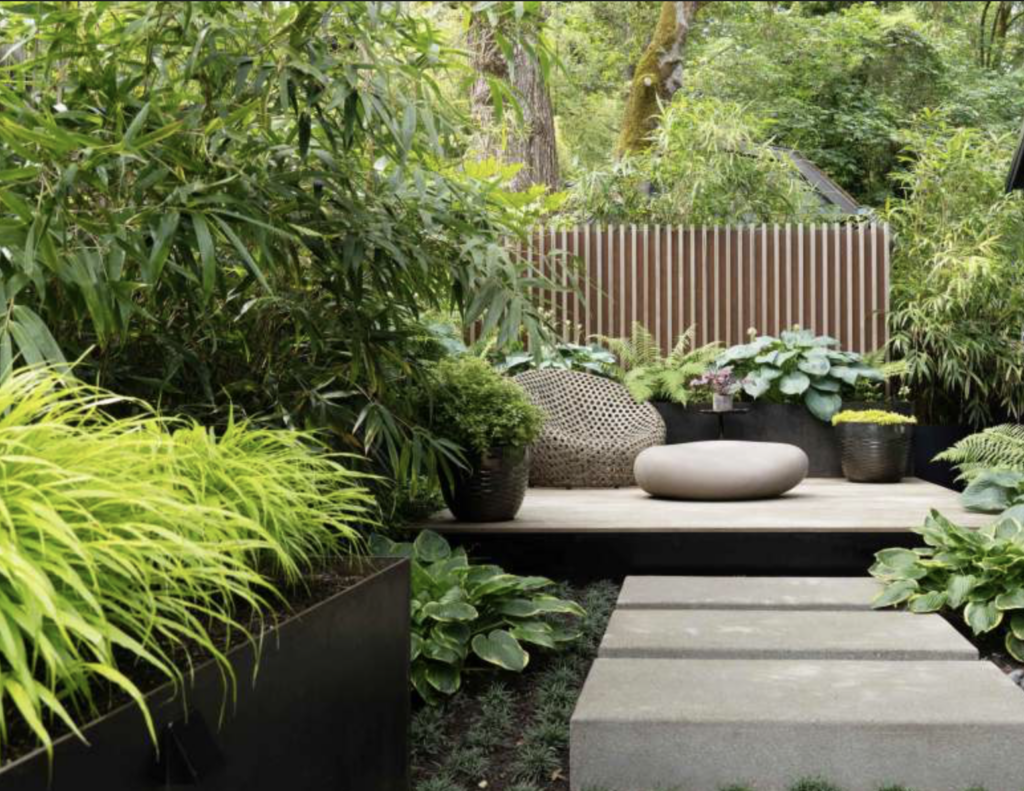
The garden nook is having a moment—and it’s a quiet, intentional one. Landscape designers are moving away from sprawling, open-plan outdoor spaces in favor of something more intimate: defined zones with distinct purposes, layered planting, and seating designed for two rather than twenty. Sunset magazine calls this approach “Botanical Bento”—small gardens treated as a series of curated, interconnected rooms, each with its own character and sensory signature. Low hedges define a dining nook. A bench under a tree becomes a reading room. A gravel path leads to a pocket terrace you didn’t know was there.
It’s a rejection of the showcase garden and an embrace of the personal one—spaces scaled to daily life rather than entertaining at capacity. The thinking is simple: a garden you use every morning is worth more than one you only show off in July. Read more in Sunset
How to make it your own:
Carve out one small zone in your garden—even just a bench, a low planting border, and a shift in ground material—and give it a single purpose. A morning coffee spot. A place to read. Let the intimacy do the work.
WHERE THERE’S SMOKE
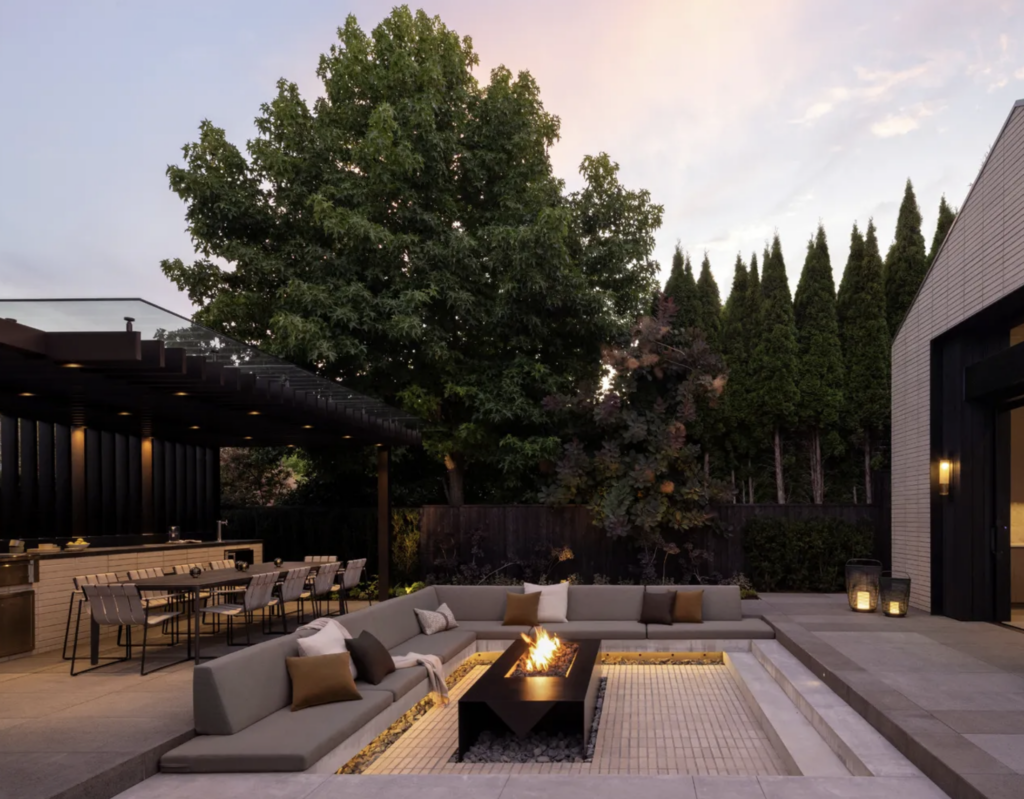
Fire has always gathered people. But the way fire features are appearing in residential outdoor spaces in 2026 suggests something more considered than a ring of Adirondack chairs around a flame. Landscape designers are increasingly integrating fire—linear gas elements, sunken pits, sculptural bowls—into the architecture of outdoor living rather than treating it as a standalone accessory. The shift, as Livingetc notes, is part of a broader move toward outdoor spaces that function with the same atmospheric layering as interiors: zoned lighting, graduated warmth, and focal points that anchor a gathering without overpowering it.
What’s most interesting is the restraint. The over-engineered fire pit table—part grill, part bar, part statement — is giving way to simpler, more permanent forms. Natural stone. Clean lines. Materials that age. A fire feature that looks like it grew out of the hardscape, not one that arrived by delivery truck. Read more in Livingetc
How to make it your own:
If you’re adding fire to your outdoor space, resist the urge to over-feature it. A simple stone-surround fire bowl or a low-profile gas line integrated into a seating wall can anchor an evening without becoming the entire conversation.
THE KITCHEN HAS LEFT THE BUILDING
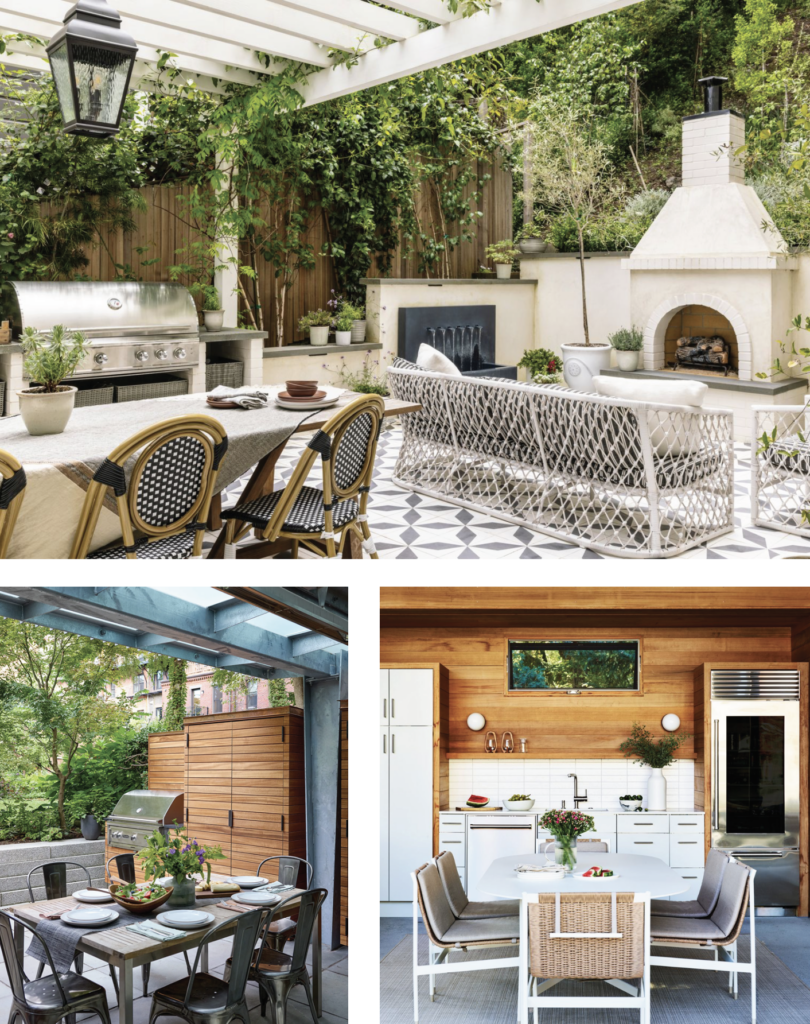
The outdoor kitchen used to mean a grill and a dream. Not anymore. Architectural Digest recently surveyed the state of outdoor kitchens, and the verdict is clear: homeowners are no longer interested in a standalone barbecue island. They want functioning kitchens—prep zones, weatherproof storage, cocktail stations, integrated lighting, and layouts designed with the same circulatory logic as an interior. One Palm Springs project, tucked beneath a cantilevered slatted pergola, treats the kitchen as a bridge between the architecture and the desert landscape. Another in Texas wraps stainless-steel appliances and a pizza oven into a poolside composition designed around hosting, not just cooking.
What’s driving this isn’t excess—it’s lifestyle. People who entertain want to stay in the conversation while they cook. Families want the flexibility of a second kitchen that handles a Tuesday dinner as naturally as a Saturday party. The outdoor kitchen, it turns out, isn’t a luxury feature. It’s a spatial strategy for people who’d rather not choose between the stove and the sunset. Read more in Architectural Digest
How to make it your own:
You don’t need a full outdoor kitchen to shift the center of gravity outside. A sturdy prep surface near the grill, a weatherproof cart with storage, and good lighting can turn any covered patio into a credible cooking zone.
PROJECT SPOTLIGHT: ALEXANDRIA MODERN BY COLAO & PETER
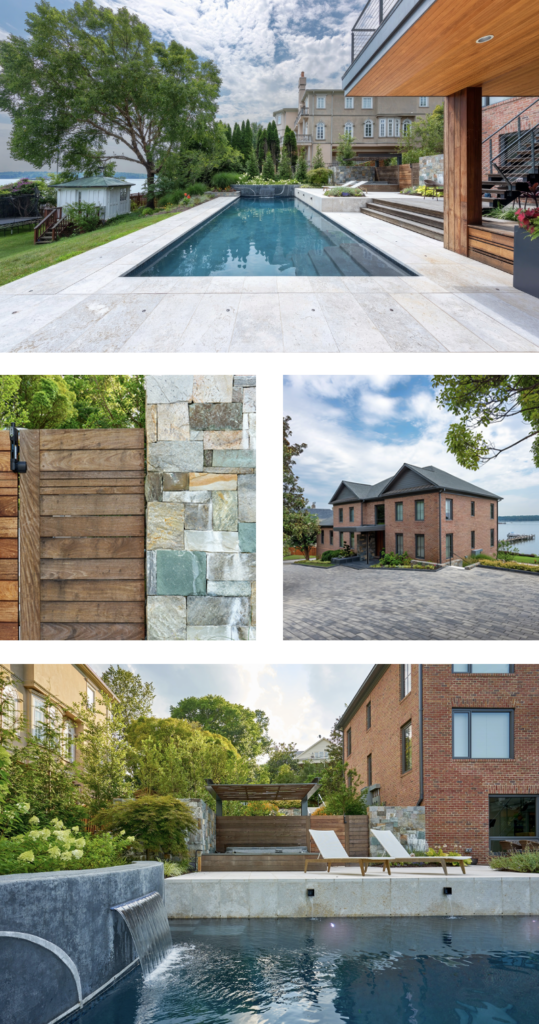
This month, we’re featuring the work of a firm we deeply admire. Colao & Peter is an award-winning landscape architecture and construction studio serving Virginia, Maryland, and Washington, D.C. Founded by Joe Colao—who comes from a line of Italian stone masons—and JR Peter, a registered landscape architect trained at Virginia Tech, the firm brings together old-world craftsmanship and modern design intelligence in a way that few outdoor living companies can. Over more than a decade, they’ve earned over twenty LCA Awards and been featured in Home & Design and Modern Luxury, building a reputation for white-glove service and meticulous execution on even the most complex residential projects.
Their Alexandria Modern project is a case in point. We’ll let the photos speak for themselves. See the full project at Colao & Peter